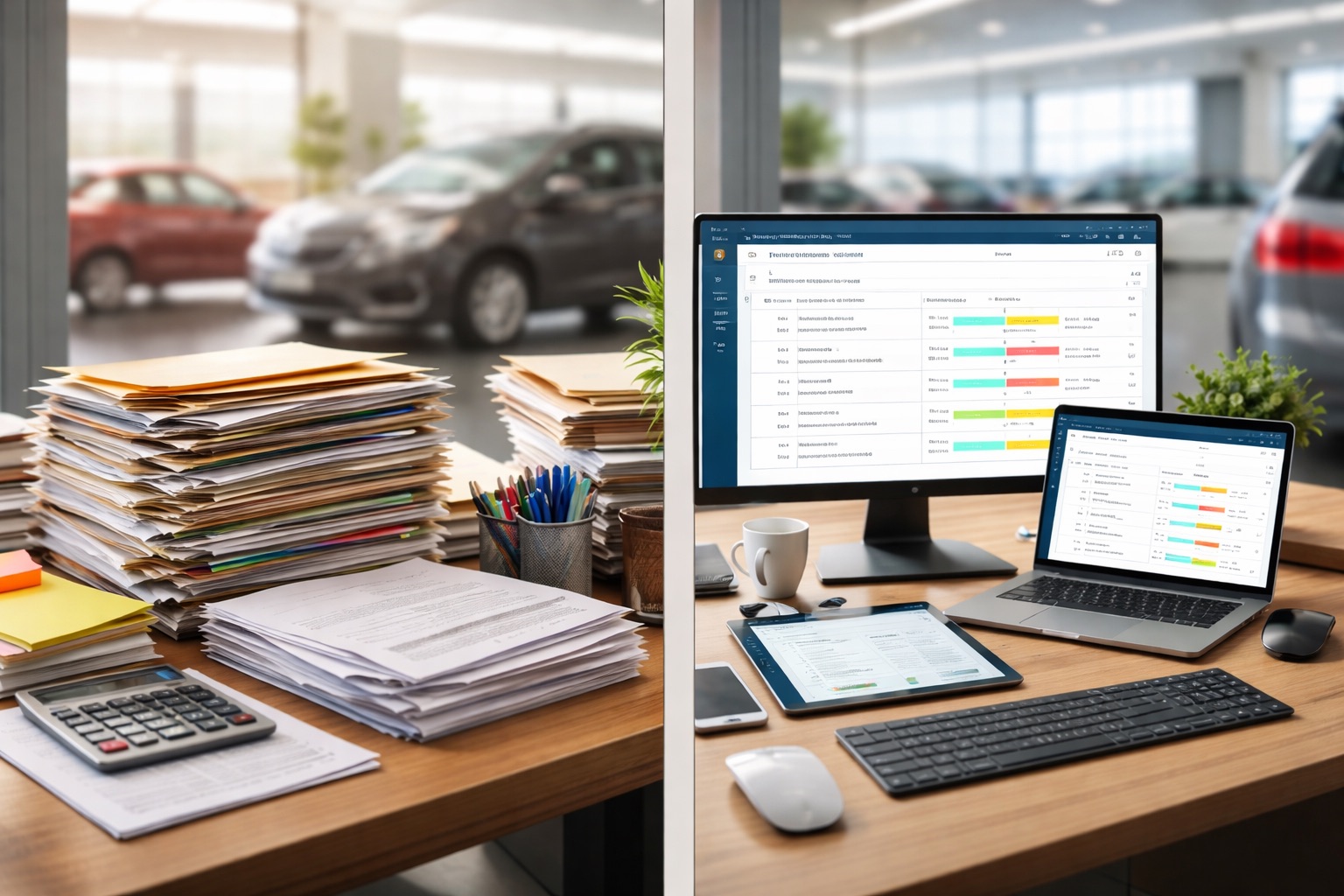
Electronic Titling Savings Ohio Dealerships: Time, Money, and Workflow Impact (2026)
February 2026 Update: This article has been updated to reflect current workflow and compliance considerations impacting the Ohio title transfer process for dealerships, including how electronic workflows are driving measurable operational savings.
Ohio dealerships don’t quietly lose profitability because of low sales.
They lose it through operational friction:
-
Title rejections
-
Manual paperwork handling
-
Funding delays
-
Staff time spent correcting errors
-
Inconsistent processing across deals
This is where electronic titling savings Ohio dealerships experience become real.
Electronic titling is not just a digitized version of paper.
It is an operational upgrade that removes friction, reduces hidden costs, and restores workflow control.
Dealerships that move to structured electronic title workflows typically see measurable gains in:
-
Back-office efficiency
-
Processing speed
-
Error reduction
-
Funding consistency
Where Paper Titling Quietly Costs Dealerships Money
Most dealerships never calculate the true cost of paper title processing. The losses show up as operational drag:
-
Staff hours sorting, filing, mailing, and tracking paperwork
-
Rework caused by rejected or incomplete submissions
-
Mailing, storage, and document handling costs
-
Funding delays while waiting on title offices
-
Time spent calling or following up on title status
Individually, these issues feel minor.
Across hundreds or thousands of deals per year, they compound into real expense.
Time Savings From Electronic Titling
Electronic workflows remove manual steps and compress processing cycles.
Dealerships gain:
-
Faster submissions through digital processing
-
Real-time status visibility
-
Immediate correction of issues before rejection
-
Fewer duplicate data-entry tasks
-
Centralized dashboards instead of manual tracking
Title teams move from reactive problem-solving to controlled workflow management.
Cost Savings From Electronic Titling
The electronic titling savings Ohio dealerships see often include:
-
Reduced mailing and document handling
-
Fewer rejections and rework cycles
-
Less overtime from backlog cleanup
-
Fewer trips to county title offices
-
Reduced paper storage and physical security costs
Even small per-deal savings scale quickly at volume.
Funding Speed and Deal Flow Impact
When titles move faster, money moves faster.
Electronic titling supports:
-
Reduced funding delays
-
Fewer stalled deliveries
-
Better coordination between F&I, title, and sales
-
Predictable deal completion timelines
Deal flow becomes smoother, faster, and more reliable.
Risk Reduction and Documentation Control
Structured electronic systems create:
-
Consistent processing steps
-
Standardized documentation
-
Digital tracking trails
-
Reduced variation between deals
This improves internal clarity and supports operational defensibility during audits or reviews.
Multi-Rooftop Efficiency Gains
Dealer groups benefit even more:
-
Standardized processes across stores
-
Easier staff training
-
Centralized visibility
-
Reduced process variation between locations
Electronic systems support scale without chaos.
The EZ E-Title Difference
EZ E-Title is built specifically for Ohio dealership operations.
Dealers gain:
-
Faster title processing
-
Registration handled inside the workflow
-
Same-day transfers
-
Reduced manual check writing
-
Dedicated dealership-focused support
Instead of “software,” EZ E-Title functions as a structured Ohio electronic titling workflow that restores operational control.
Learn how the system works at the EZ E-Title platform here:
Ohio electronic titling workflow
Final Thought
The electronic titling savings Ohio dealerships experience show up as:
-
Time regained
-
Fewer errors
-
Smoother funding
-
Reduced operational friction
These gains are not theoretical. They come from eliminating variability and manual bottlenecks.
If your dealership is still relying on paper processes, you are working harder than necessary.
Call to Action
Book an Ohio Dealer Demo
If you want to walk through your current workflow and compare it to electronic execution at dealership scale, we’re happy to review it with you.
Frequently Asked Questions
Is electronic title transfer required for Ohio dealerships?
No. Electronic processing is optional in Ohio, but many dealerships adopt it to reduce rework, improve consistency, and maintain cleaner audit trails within the title transfer process.
Does electronic processing change compliance requirements?
No. It changes how requirements are executed and documented — not what is required.
Can dealerships mix manual and electronic workflows?
They can, but mixed workflows often introduce inconsistency, duplicate effort, and higher risk across title transfers.
Is electronic title transfer mainly about speed?
Speed helps, but predictability, documentation, and reduced rework create the largest operational and financial gains.
Who should evaluate workflow changes?
Controllers, title managers, office managers, and dealership leadership are best positioned to evaluate workflow changes.