Free BMV vs Dealer-Paid Electronic Titling Systems Ohio
Quick Answer
How does using Ohio’s free BMV electronic titling tools compare to dealer-paid electronic titling systems after March 1, 2026?
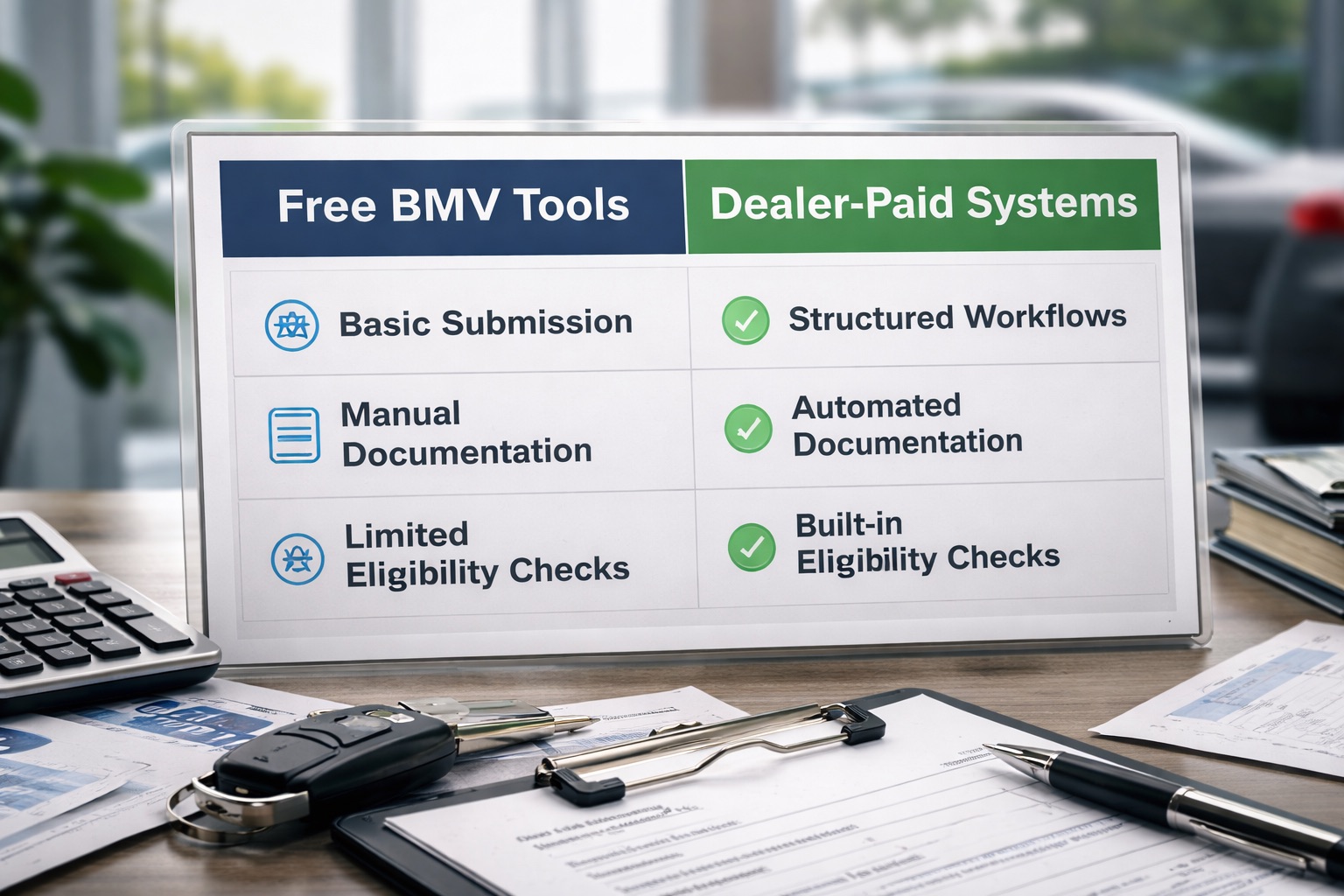
Free BMV tools allow electronic submission, but they do not inherently provide structured workflow controls, eligibility enforcement, or standardized documentation tied to the Registration & Titling Service Fee. Dealer-paid systems function as workflow platforms that support consistent processing, documentation, and defensibility when qualifying services are performed.
March 1 Turned System Choice Into a Compliance Decision
Electronic titling used to be primarily about speed.
After March 1, 2026, it is also about:
-
fee eligibility support
-
documentation consistency
-
standardized itemization
-
audit defensibility
The rule allows dealers to charge up to $50 per vehicle when qualifying services are performed and properly documented. That means how a dealership processes titles now intersects with compliance structure.
For full rule context, see the Ohio Registration & Titling Service Fee overview.
What “Free BMV Electronic Titling Tools” Actually Mean
Ohio provides electronic titling access through state-supported systems.
These tools allow submission but typically do not function as full workflow management platforms. They may not inherently include:
-
dealer-controlled workflow standardization
-
eligibility prompts or enforcement
-
consistent itemization logic
-
structured internal audit trails
When a dealership relies only on free submission tools, process control depends heavily on staff habits and manual documentation.
What Dealer-Paid Electronic Titling Systems Provide
Dealer-paid systems operate differently. They are designed to manage process, not just submission.
They typically support:
-
structured workflow steps
-
standardized naming and itemization
-
documentation logs
-
visibility into processing history
-
consistency across transactions
That structure helps dealerships maintain process consistency across staff and rooftops.
Dealerships modernizing their operations often implement systems that align process controls with documentation needs. See how Ohio dealership registration software supports workflow standardization.
Why System Choice Now Affects Revenue Defensibility
The Registration & Titling Service Fee must be connected to qualifying services and proper documentation. It is not automatic.
When workflows are unstructured:
-
fee application may vary by employee
-
documentation may be incomplete
-
labels may differ across deals
Those patterns create exposure during review.
When workflows are system-driven:
-
naming stays consistent
-
itemization remains standardized
-
documentation exists in one place
-
variation is reduced
This is why system choice now plays a role in compliance strategy.
For examples of practices that create risk, review prohibited practices for dealerships.
Compliance Differences at a Glance
| Area | Free BMV Tools | Dealer-Paid Systems |
|---|---|---|
| Workflow structure | Staff-driven | System-driven |
| Eligibility enforcement | Manual | Embedded in process |
| Itemization consistency | Varies | Standardized |
| Documentation trail | Separate/manual | Structured logs |
| Audit defensibility | Depends on process | Supported by system records |
| Multi-store consistency | Harder to control | Easier to standardize |
Operational Differences
Free submission tools rely on:
-
staff memory
-
individual habits
-
variable labeling
-
manual record retention
Structured systems embed process rules into the workflow itself. That reduces variability and simplifies training, oversight, and internal review.
When Free Tools Still Make Sense
Free BMV tools may still be appropriate when:
-
the dealership processes low volume
-
no qualifying services are performed
-
the dealership has separate internal documentation controls
The key is aligning system choice with how the dealership applies fees and manages documentation.
System Choice Is Now Part of Compliance Planning
Before March 1, system choice was often an operational preference.
After March 1, it intersects with:
-
eligibility support
-
documentation reliability
-
process consistency
-
fee defensibility
Dealerships that align systems with structured workflows reduce variation and exposure.
Frequently Asked Questions
Does a paid system automatically allow the fee?
No. Qualifying services must still be performed and documented.
Can a dealership remain compliant using free tools?
Yes, but documentation and process controls must still support eligibility and consistency.
Why does documentation matter?
Because the fee must be supported by evidence that dealer-performed services occurred.
Final Thought for Dealership Operators
The March 1 rule did not just change a fee. It changed how system choice intersects with compliance and revenue defensibility.
Dealerships that align systems, workflows, and documentation processes are better positioned to apply the rule consistently.
Ready to see how structured workflows support eligibility, itemization, and documentation?
See how EZ E Title enforces process consistency in one system.
Schedule your fast, no-pressure demo by hitting this Link here: EZ DEMO!