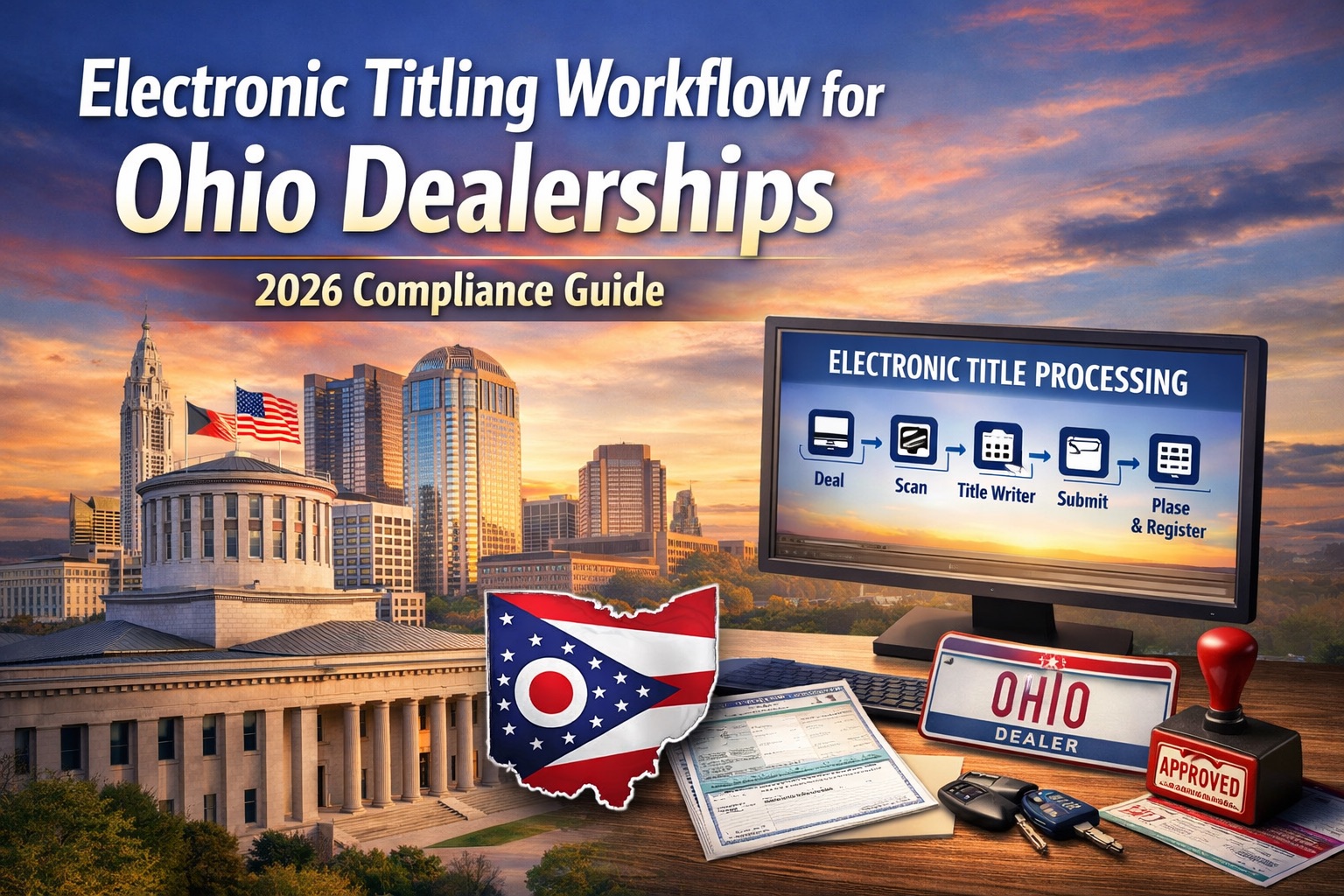
Electronic Titling Workflow for Dealerships Ohio (2026 Guide)
Why Electronic Titling Workflow for Dealerships Ohio Is Changing in 2026
Across Ohio, dealerships are quietly reevaluating how their titling, registration, and plating workflows actually operate behind the scenes.
Not because of software trends.
Because of compliance, speed, and revenue structure tied directly to the March 1 rule change around Registration & Titling Service Fees.
Many stores believe they are already “electronic.”
But when processes are reviewed closely, we consistently see:
-
Manual title handling still in the mix
-
Free BMV tools used alongside paid workflows
-
Inconsistent documentation tied to deals
-
Separate systems for titling, registration, and plates
Those gaps do not show up on deal day.
They show up later in audits, rework, and delayed processing.
For context on how dealerships are currently approaching electronic processes, many start by researching operational topics like Ohio car registration lookup — but the real issue is not lookup speed. It is workflow structure.
The Hidden Operational Problem Inside “Partially Electronic” Stores
From the outside, the store may appear fully digital.
Inside the dealership, the workflow often tells a different story.
Common operational gaps we see in Ohio dealerships:
-
Handwriting on the back of titles
-
Different staff following different processes
-
Trade-ins handled manually when lien delays happen
-
No unified deal status tracking
-
Re-keying the same data across multiple systems
This is not a training issue.
It is a workflow architecture issue.
What a True Dealership Electronic Titling Workflow Actually Includes
Electronic submission alone is not a full dealership workflow.
A properly structured system integrates:
-
Electronic titling
-
Registration processing
-
Plating coordination
-
Document scanning and sorting
-
Real-time deal tracking
-
Reporting and audit trail documentation
This is why dealerships evaluating modern systems typically look at a unified platform like EZ E Title for dealerships, where titling, registration, and plating operate inside one structured environment instead of multiple disconnected tools.
2026 Rule Change: Why System Structure Now Impacts Revenue and Compliance
As of March 1, 2026, Ohio dealerships may charge a Registration & Titling Service Fee (up to $50) when the workflow is structured correctly.
Key operational requirements include:
-
Use of a paid third-party electronic titling provider
-
Proper disclosure of the fee
-
Consistent documentation tied to each transaction
-
A standardized, repeatable electronic process
Important distinction:
Using fragmented tools or partially manual processes can create gray areas in documentation and eligibility.
Dealership leadership is beginning to realize this is not just a compliance conversation.
It is a workflow consistency conversation.
Revenue Opportunity Alert: Workflow Structure Determines What Gets Left on the Table
Most dealerships focus only on processing cost.
High-performing stores focus on workflow structure.
When a compliant electronic system is implemented correctly:
-
Deals move faster
-
Rework drops significantly
-
Documentation becomes automatic
-
Staff time is reduced
-
Fee alignment becomes operationally supportable
Illustrative example:
If a dealership processes 100 titles per month
and runs a fully compliant workflow tied to electronic processing,
the operational margin potential scales with volume and consistency.
This is why more Ohio dealerships are viewing titling as an operational revenue support function, not just an administrative task.
One Platform vs Multiple Tools: The Dealership Efficiency Gap
Many stores are still operating with:
-
One system for titles
-
Another for registration
-
Manual plate tracking
-
Email-based document follow-ups
A unified dealership system consolidates everything into one workflow, including:
-
Titles
-
Registration
-
Plating
-
Documentation
-
Reporting
-
Compliance tracking
This eliminates bottlenecks and creates operational clarity across rooftops and staff roles.
Ohio Title Writer: Eliminating Handwritten Title Errors
One of the most overlooked inefficiencies in dealerships is still handwriting on titles.
With an automated Ohio Title Writer inside a structured platform:
-
Title fields are completed accurately
-
Clerical errors are reduced
-
Rejections decrease
-
Processing speed improves
Instead of correcting paperwork after submission, the workflow prevents errors before they occur.
Out-of-State Titles and Trade-In Processing Delays
Out-of-state titles and lien payoffs are one of the biggest hidden delays in dealership operations.
Without a structured electronic workflow:
-
Payoff timelines stretch
-
Title arrivals slow down
-
Funding delays increase
-
Customer delivery timelines get impacted
A dealership-focused system designed around real workflows helps standardize how trade-ins, lien situations, and out-of-state titles are tracked and processed inside one operational dashboard.
Audit Trail and Documentation: The Silent Risk Most Stores Ignore
Not on the day of the deal.
Months later.
That is when documentation questions surface.
A structured electronic titling workflow provides:
-
Real-time status tracking (Queued → Sent → Issued → Rejected)
-
Nightly reporting visibility
-
Automatic documentation capture
-
Consistent deal-level audit trails
This protects the dealership long-term while reducing internal confusion between staff and departments.
Why Ohio Dealerships Are Moving Toward Unified Titling, Registration, and Plating Systems
The shift is not about replacing staff.
It is about standardizing process.
Dealership groups adopting unified electronic workflows are prioritizing:
-
Compliance alignment with the 2026 rule
-
Faster deal processing
-
Reduced manual rework
-
Scalable multi-rooftop operations
-
Cleaner documentation tied to every transaction
Instead of stitching together multiple tools, they are centralizing workflow inside a single dealership system designed specifically for title clerks, office managers, and compliance teams.
Final Takeaway: Electronic Submission Is Not the Same as Workflow Control
The real competitive advantage in 2026 is not simply submitting titles electronically.
It is running:
-
Titles
-
Registration
-
Plating
-
Documentation
-
Reporting
inside one unified, dealership-focused workflow.
Dealerships that standardize this now will operate faster, cleaner, and with significantly less compliance ambiguity than stores relying on mixed manual processes.
See a Real Electronic Titling Workflow for Dealerships Ohio in Action (Dealer Demo)
If your dealership is currently:
-
Mixing manual and electronic title steps
-
Using multiple vendors for registration and plating
-
Evaluating the new $50 Registration & Titling Service Fee structure
-
Looking to tighten compliance and processing speed
The most effective next step is a live dealership workflow walkthrough.
You can schedule a structured platform demo here:
Book an EZ E Title Dealer Demo
No theory.
No generic pitch.
Just a real walkthrough of how a unified Ohio electronic titling, registration, and plating workflow operates inside active dealerships.